


Ministry of Reconciliation & Mercy | Prophetic Contemporary Fine Art by Anne Reid Artist
Mar 20, 2026
Ministry of Reconciliation & Mercy
By Anne Reid Artist
About the author: Anne Reid Artist is a contemporary abstract painter whose work explores prophetic art, presence, healing, and the spiritual life of the studio through color, movement, and form.
Ministry of Reconciliation and Mercy belong together because they hold a sacred sequence. The first is about the Cross as plumb line — clarity, discernment, responsibility, and mercy anchored in truth. The second is about the washing — renewal, restoration, and the quiet reassurance that grace is not exhausted.
These works are not commentary on events or statements about culture. They are visual anchors for people carrying weight — especially in leadership, prayer, and private decision-making. One steadies the heart before action. The other restores the heart after difficult alignment.
What is Ministry of Reconciliation about?
There are moments in leadership that never reach a microphone. They unfold in private, in silence, in prayer — in the tension between love and responsibility.
Ministry of Reconciliation emerged from my own wrestling. There was a season when I found myself working through difficult questions — questions about forgiveness, protection, responsibility, and the weight of leadership. I wanted to love well. I wanted to believe the best. I also needed clarity. As I painted, something settled.
Reconciliation with God is always open to the repentant heart. Restoration of trust, however, is a different matter. The Cross does not confuse those two things. It steadies them.
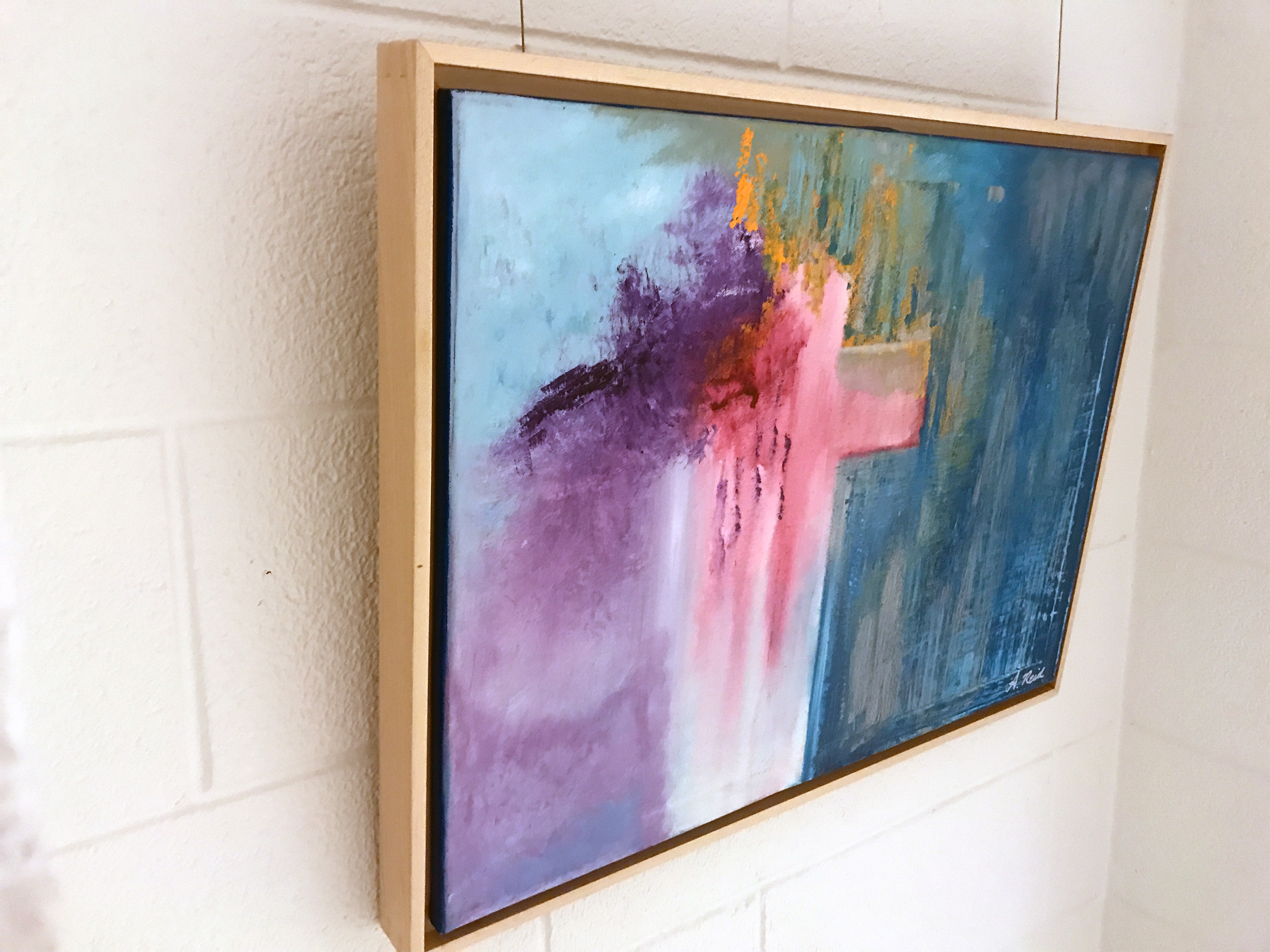
In this work, the vertical line is not imposed — it is present. Through fields of rose, lavender, and softened light, the Cross stands as a quiet plumb line. It measures without accusation. It reveals without force. When responsibility feels heavy — when decisions affect not just one, but many — the heart must pass through the Cross before action is taken. Anger must be purified. Compassion must be clarified. Mercy must be anchored in wisdom.
This painting reflects that internal passage — the movement from confusion to clarity, from emotional reaction to alignment. It holds the place where love protects without hardening, and where discernment becomes an expression of mercy rather than its denial.
Ministry of Reconciliation feels most at home in a place of prayer — a study, a private office, a room where difficult questions are brought before God before they are brought before people.
Not all battles are visible. Many are fought within. The Cross measures the heart before it measures the situation.
What does this work clarify?
- Forgiveness and restored trust are not always the same thing.
- Mercy does not cancel discernment.
- Leadership decisions should pass through prayer before public action.
- The Cross steadies the heart when emotion and responsibility collide.
What is Mercy about?
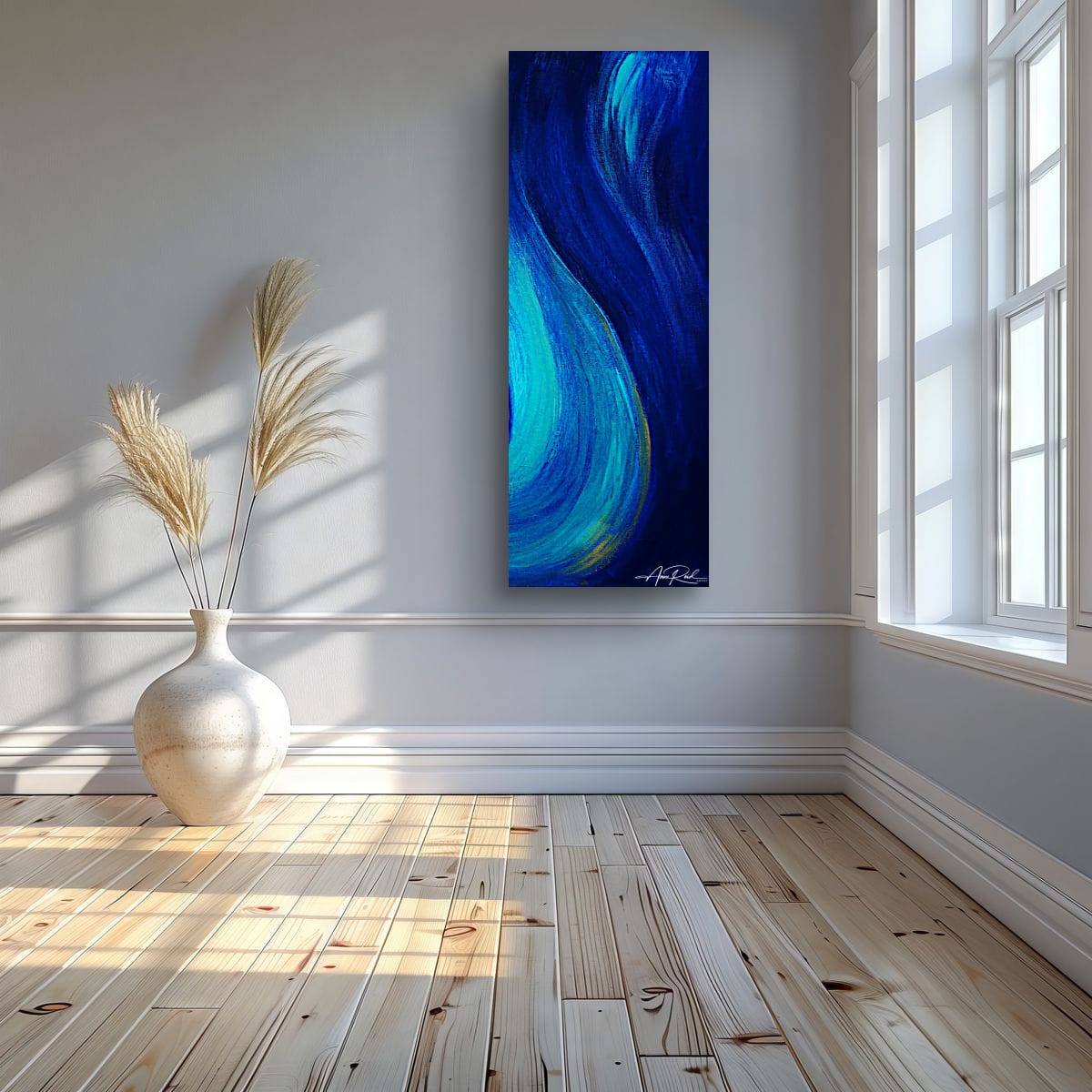
If Ministry of Reconciliation is the Cross, Mercy is the washing. Where the Cross steadies, Mercy flows. Where discernment draws a boundary, Mercy restores the soul.
Some failures are public. Some struggles are hidden. All of them meet the same mercy at the throne of grace. Mercy does not erase consequence — but it restores relationship. It reminds the weary heart that grace is not exhausted. It reassures the one who feels they have failed that God's presence is not withdrawn. It offers quiet renewal after difficult alignment.
Mercy belongs where light can move across it — at the end of a passage, in a gathering space, on a wall that receives the day. It is less about wrestling and more about release.
What does Mercy bring into a room?
- Renewal after strain or sorrow
- Reassurance that grace is still present
- A softer atmosphere of release and restoration
- A visual reminder that mercy restores the weary heart
How do these two works relate to each other?
The Cross. Then the washing. Alignment. Then renewal.
Ministry of Reconciliation is about discernment under weight. Mercy is about restoration after surrender. One clarifies. The other consoles. One holds the plumb line. The other carries the release that follows obedience. Seen together, they form more than a pair. They form a passage.
At a glance: the difference between the two works
- Ministry of Reconciliation — the Cross, discernment, clarity, responsibility, inward testing
- Mercy — the washing, renewal, restoration, reassurance, quiet release
Who are these works for?
These works are especially meaningful for people who carry weight and must seek wisdom before they speak — leaders, pastors, intercessors, caregivers, decision-makers, and anyone walking through the tension between compassion and responsibility. They are not loud declarations. They are quiet companions for rooms where difficult questions are brought before God.
Art does not replace discernment. But sometimes, hanging quietly in a room, it steadies the heart long enough to hear it.
Where do these works belong?
- Ministry of Reconciliation belongs especially well in studies, prayer rooms, private offices, and leadership spaces.
- Mercy belongs where light can move across it — gathering spaces, transitional spaces, hallways, and rooms needing calm renewal.
Explore these works
View the prints directly: Ministry of Reconciliation and Mercy 2.
To understand more about the theological register these works operate in, read What Is Prophetic Art? For placement advice, commission enquiries, or questions about either work, visit the contact page.
Frequently asked questions
Are these works political or cultural commentary?
No. They are not statements about culture or current events. They are visual anchors shaped by prayer, mercy, discernment, and the inner life of leadership.
Do these paintings suggest that mercy ignores consequences?
No. Mercy does not erase consequence. It restores relationship and offers renewal without confusing wisdom, truth, or accountability.
Why are these works important for leaders?
Because leaders often face hidden battles of discernment, forgiveness, protection, and responsibility. These paintings help frame those tensions through the Cross and the washing.
Do these works need to be displayed together?
No. Each work can stand alone. But together they reveal a fuller spiritual sequence: clarity first, then renewal.